
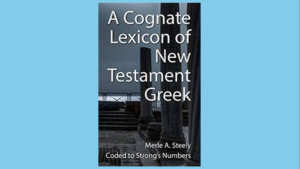

A Cognate Lexicon of New Testament Greek
This book by Merle A. Steely is an excellent Bible Study Tool for the student who has some familiarity with the Koiné Greek language.
A standard Greek-English lexicon is designed to provide you with an alphabetical listing of every Greek word in the New Testament (alphabetical by the Greek alphabet). In addition, English definitions will be supplied, often along with the lexicographer’s understanding of that word’s semantic range. These lexicons are very helpful Bible study tools. But this book is NOT a Greek-English lexicon.
Why Greek Studies?
“You don’t have to know the Greek!” is something I’ve been told by many people over time, including gospel preachers, in the context of studying the New Testament. While I do not agree with your “everyday” Christian (if you will) who makes that claim, I at least understand it. But when a gospel preacher boldly proclaims such a thing, that I don’t understand.
An Introduction To Hermeneutics
It is possible that you have never heard the word “hermeneutics.” It is even possible that you have heard the word but do not know what it means. It may also be that you have some idea of what “hermeneutics” is about but are unable to explain it. But what you cannot factually say is that you have never used hermeneutics. In fact, it may surprise you to learn that not only have you used hermeneutics in the past, but you continue to use it—and you are even applying hermeneutical principles as you read these words.

What Does “Matthew 18:19-20” Mean? (An Example of Exegesis – Part Three)
Note: If you have not already done so, please go back and read Part One and Part Two of this study. It is within the context we have previously studied in Matthew 18:1–17 that Jesus continues in verses 18–20.